
ARMYWEB: a web resource for African armyworm and its biological control 

  LATEST ARMYWORM NEWS:                        

Emergency Transboundary Outbreak Pest Situation Report for African Armyworm (AAW):

Latest update (May 4th 2012):

Current situation: "AAW situation remained relatively calm in April and only some trap catches were reported in Mbeya in Tanzania (DLCO-EA, IRLCO-CSA, and PHS/Tanzania)".

Forecast: "AAW activities will likely commence in Kenya and perhaps southern Ethiopia, but other countries will likely remain calm during the forecast period (AELGA, DLCO-EA, and IRLCO-CSA)

With thanks to Dr Yene Belayneh at USAID. You can learn more about ETOP activities and projects by visiting:  http://www.usaid.gov/our_work/humanitarian_assistance/disaster_assistance/locust/

Other news:
  • GhanaWeb (17th May 2012): Ghana: Veep joins fight against Army Worms - "The Vice President, John Dramani Mahama is in the Ketu South district of the Volta region to assess the impact of the Army worm infestation in the area. Farmers working under the Weta Irrigation Scheme in the District have suffered crop loss due to the infestation. Reports indicate that over seventy percent of the over 800 hectares of land has been destroyed by the worms." For the full story, click here.
  • Ghana Broadcasting Corporation (15th May 2012): Ghana: Army worm infestation in Volta Region under control - "The Volta Regional Director of the Ministry of Food and Agriculture, John Ricky Tsrakasu, says the army worms that infested farms in the region are under control.  He said following the early intervention by NADMO, there is no need to be alarmed. Mr Tsrakasu told Radio Ghana’s correspondent that farmers in the region no longer see the threat by the army worms as a disaster.GBC." Click here.
  • Myjoyonline (11th May 2012): Ghana: Agric officers want war declared on army worms or... - "Agric officers fear a looming food crisis following the invasion of army worms in the country and want a war declared immediately to fight the canker. They say the country has only a week to begin that war or risk been hit by a severe food crisis. The worms reportedly migrated from Togo the past few weeks and have succeeded in causing pain to thousands of farmers by eating up their crops." For the full story, click here.
  • GhanaWeb (10th May 2012): Ghana: Volta army worms outbreak under control - "About 5,200 acres of rice farms in the Ketu-North District have been invaded by army worms causing massive destruction to the crops for the past five days. The farms include 1,200 acre Afife Irrigation Project Farm and another 3,000 acres of rain fed private farms located in the Kpli Valley at Klenomadi. A total of 2,524 farmers risk losing their entire investment and livelihood and are currently agitated." For the full story, click here.
  • BusinessGhana (10th May 2012): Ghana: Army worm destroys rice farms in Ketu-North District - "The Volta Regional Directorate of Agriculture has commenced spraying rice farms in Ketu south district to prevent the spread of army worm invasion in the district.  Over 2000 acres of rice farms in parts of the Volta Region have been attacked by army worms. A similar situation has been recorded in the Damgbe East district of the Greater Accra Region." For the full story, click here.
  • Ghana Broadcasting Corporation (10th May 2012): Ghana: Farmers alarmed over army worm infestation - "Farmers working under the Weta Irrigation Scheme in the Ketu North District of the Volta Region are alarmed over army worm infestation that has caused havoc to farm produce. They disclosed that about 70 percent of the eight hundred and eighty (880) hectares of land has been destroyed by the worms. Speaking on Radio Ghana's 'Behind the News', the Volta Regional Minister Henry Ford Camel said government is embarking on an extensive spraying exercise to eliminate the worms.GBC NEWS." Click here.
  • The Swazi Observer (26th Jan 2012): Swaziland: Armyworm Outbreaks Reported in Lubulini and Lavumisa - "Farmers have been advised to be aware of a pest that is ravaging maize. Ministry of Agriculture Plant Protection Unit’s Boniface Makhubu said the pest; armyworm (umgundzatjani) has been located around Lubulini and Lavumisa. He said the armyworm eats maize leaves thereby retarding its growth. “Once this pest affects the maize, there can be no yield as it is dangerous. The harvest is greatly affected." For the full story, click here.
  • The Herald (20th Dec 2011): Zimbabwe: Armyworm Outbreak in Chegutu - "An armyworm outbreak in Chegutu district has destroyed more than 500 hectares of crops and pastures with nearly 10 hectares of maize now a write off...." For the full story, click here.
top
  • Armyworm presentation at UK meeting (10th Nov 2011): Professor Ken Wilson is the keynote speaker at the Royal Entomological Society meeting on "Biology of Lepidoptera" held at Rothamsted, UK. His presentation will discuss latest developments in understanding the ecology and biocontrol of African armyworms. For details, click here.
  • Derek Rose RIP (7th Sep 2011): It is with great sadness that we report the death of Dr Derek Rose, who led the African armyworm project in Kenya in the 1980s. One of Derek's many legacies is the 'African Armyworm Handbook', which he compiled with Bill Page and Charles Dewhurst. He will be sadly missed by all of his friends and ex-collagues.   
  • More armyworm presentations at UK conferences (Sep 2011): Professor Ken Wilson reports on the latest armyworm baculovirus ecology work at the British Ecological Society annual conference held in Sheffield, UK, and David Grzywacz discusses armyworm bioogical control at a special symposium "Biocontrol of insect pests: from the lab to the field" at the Royal Entomological Society meeting in the University of Greenwich, UK.
  • Findings of armyworm biological control project discussed at two international conferences (Aug 2011): Professor Ken Wilson presents the latest findings to delegates at the Ecological Society of America annual conference held in Austin, Texas (USA) and Dr Rob Graham does the same at the Society for Invertebrate Pathology annual meeting in Halifax, Nova Scotia (Canada).
  • Armyworm workshop in Arusha (8th June 2011): To coincide with the impending end of the SARID project, funded by the BBSRC and DFID, there was a workshop held in Arusha. Presentations were given by Dr Rob Graham (Lancaster University), Professor Kenneth Wilson (Lancaster University) and David Grzywacz (NRI, University of Greenwich). Delegates included officials from the Tanzanian Ministry of Agriculture, Food and Cooperatives, including Dr Francisca Katagira (Plant Health Services Section). Others present included Wilfred Mushobozi (EcoAgriConsult Ltd), who showed the delegates around the new DFID RIU-funded baculovirus production facility in Arusha, which is nearing completion, as well academic staff from Sokoine University of Agriculture (Profs Madoffe and Makundi), and armyworm specialists from Pest Control Services in Tengeru. For further details on the SARID scheme, see here.  
        SARID_workshop_at_facility
          
photo (c) Wilfred Mushobozi
  • Armyworm outbreaks in Tanzania continue to move northwards (Apr 2011): Extensive outbreaks in Korogwe and Handeni districts. Many fields of young maize plants have been completed destroyed by armyworms and will require replanting if the rains allow. 
        farmer  armyworm on maize Korogwe  armyworm Korogwe
          photos (c) Wilfred Mushobozi
  • More armyworms outbreaks in Tanzania (Feb / Mar 2011): Extensive outbreaks in Morogoro, Mvromero and Korogwe.
  • Armyworms outbreaks reported (Jan 2011): Extensive outbreaks of armyworm caterpillars reported in  Zimbabwe and Tanzania. For further details, click on the links: below: 
          AWonmaize  NPV-dead larva
           photos (c) Ken Wilson

        The Zimbabwean (12th Jan 2011): "Armyworm destroys maize" - outbreaks reported in Bulawayo, Zimbabwe 

        ZBC (11th Jan 2011): "Armyworm outbreak reported countrywide" - outbreaks in greater Harare and Bulawayo, Zimbabwe

        Panapress (10th Jan 2011): "Armyworm devastates crops in Zimbabwe" - outbreaks in northern Zimbabwe

        The Citizen (6th Jan 2011): "DC sounds alert as rats, worms overrun villages" - outbreaks in Morogoro and Mtwara, Tanzania
   

        Afrique Avenir (4th Jan 2011): "Armyworm outbreak devastes Zimbabwean province" - outbreaks in Zimbabwe

top

  • Building work progressing well on armyworm bio-pesticide production facility (Sep 2010):  For the full story visit the RIUtv webpage here
         NPVbuildingSept2010
          photo (c) Wilfred Mushobozi
  • Armyworm feature on Research Into Use TV (May 2010): Wilfred Mushobozi (EcoAgriConsultancy Ltd, Tanzania) and Gaspar Mallya (National Armyworm Forecaster, Tanzania) talk about armyworm community-based forecasting and biological control using SpexNPV baculovirus - to see the videos, click here.
  • New funding for armyworm research announced (Jan 2010): It has just been announced that further research into armyworm forecasting and biological control is to be funded (for further details click here). DFID's Research for Development website reports: 

    Over 100 project proposals were submitted in the response to the call for projects in East, Central and Southern Africa. From these, 8 were short-listed and the final 4 were selected at an event in Nairobi, Kenya, on 26-27 November 2009, when candidates pitched their proposals to a panel of high-powered business leaders and research experts. The winning projects [include]:

    Safe and affordable armyworm control tools in East Africa (led by CABI Africa - Kenya and EcoAgroConsultancy Ltd. - Tanzania) - for establishing a system for the production, supply, distribution and marketing of safe and affordable armyworm control tools in Tanzania and Kenya over the next 18 months. This pest attacks pasture and key crops such as maize, sorghum, millet and rice. The total area of crops prone to attack in Tanzania and Kenya is estimated at 2.1 million hectares. Part of the project involves armyworm forecasting which aims to help villagers predict armyworm outbreaks and tackle the problem before it gets out of control. 

  • Armyworms in the news (Jan 2010): There have been extensive outbreaks of armyworm caterpillars in  KenyaTanzania and Malawi in the last month. For further details, click on the links below: 
        Chronicle (21st Jan 2010): "Agritex contains armyworm outbreak" - outbreaks in Malawi          
        IRINnews (20th Jan 2010): "Kenya: worm outbreaks threaten food security" - outbreaks in central & eastern Kenya
        Reuters Africa (18th Jan 2010): "Dry spell, army worms damage Malawi crops" - outbreaks in Malawi
        Daily Nation (10th Jan 2010): "The army worm must be stopped " - outbreaks in Ukambani, Kenya
        The Citizen (31st Dec 2009): "Armyworm scourge spreads to ten regions" - outbreak risk in Tanzania
        The Citizen (30th Dec 2009): "Red alert as armyworms invade two districts" - outbreaks in Tanzania
        Nature News (24th Dec 2009): "Whatever happened to ... Liberia's caterpillar plague" - click here for January 2009
  • Halting the Armyworm March (Dec 2009): Armyworm research features on BBSRC's new Food Security website - for further details, click here.
  • Armyworm in West Africa (Dec 2009)? There were major suspected outbreaks of armyworms in Liberia and neighbouring countries. It turned that the 'armyworm' caterpillars that caused such havoc had been mis-identified and were in fact Achaea catocaloides. Read the full story here.

top

___________________________________________________________________________________________________________________________

What is the African armyworm?

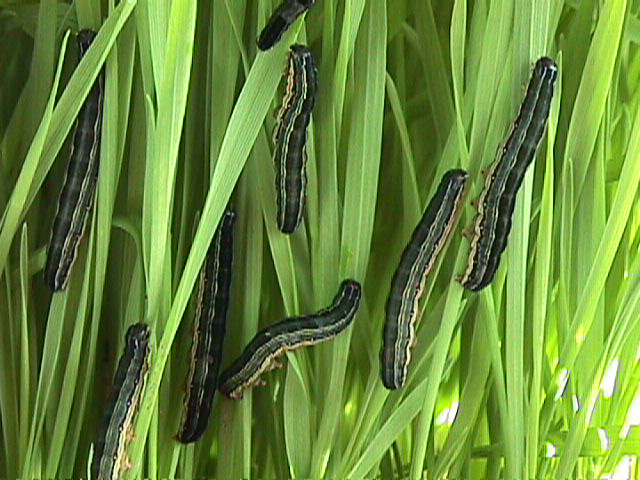
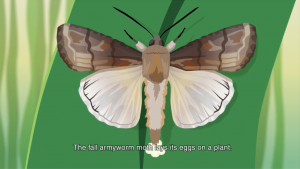
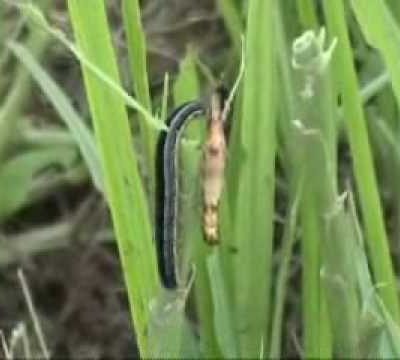
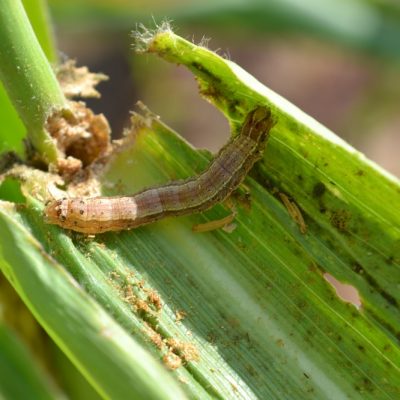
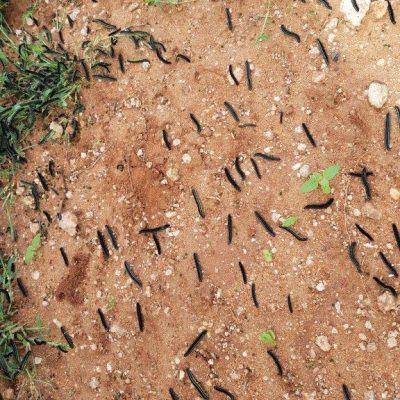
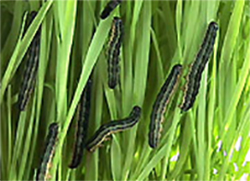
The African armyworm moth, Spodoptera exempta is one of the most devastating crop pests in eastern Africa. It is the caterpillar or larval stage that causes such havoc, voraciously feeding on maize, wheat, sorghum, millet, rice and pasture grasses. 

Armyworm have been reported throughout sub-Saharan Africa, however the majority of outbreaks occur on the eastern half of the continent, and especially in Tanzania, Kenya and neighbouring countries.

In East Africa, armyworm outbreaks are considered a serious problem in nine out of ten years (Mushobozi et al. 2005), and in major outbreak years armyworm can affect millions of hectares, causing massive losses to staple grain crops, as well as more widespread damage to pasture and livestock production (Rose et al. 2000).

armyworm
High-density outbreak of African armyworm larvae on pasture.  photo (c) Wilfred Mushobozi

top

Like the infamous desert locust, the African armyworm has such a major impact because the adult stage (a moth) is highly migratory and the location, timing and magnitude of its outbreaks are difficult to predict.

During the long dry season (c. May to September), armyworms occur at very low densities in coastal regions, and other areas where green vegetation is available all year round.

The first outbreaks of the season occur when moths from these low-density populations are concentrated by the convective winds associated with the first rainstorm of the short rains in October-December. These first outbreaks generally occur in identified primary (10) outbreak areas in Tanzania and Kenya. They then spread sequentially across the continent at roughly monthly intervals over a period of 5-8 months, as successive generations of adult moths migrate on the prevailing winds and initiate new high-density larval outbreak cycles (Figure 1).

The most reliable predictor of the annual magnitude of armyworm outbreaks in East Africa is the amount of early-season rainfall: when the rains in November-December are heavy and frequent, relatively few armyworm outbreaks occur throughout the region, whereas when the early-season rains are poor, outbreaks are much more common and widespread (Harvey & Mallya 1995). The exact cause of this relationship has yet to be established.

top

map
AW moth
African armyworm moths migrate hundreds of kilometres during their short lifetme.

Why control African armyworm?

When armyworms attack the newly sown crop, serious losses result.

The main management tool for armyworm is the application of imported chemical pesticides.

However, recent studies have shown that chemical insecticides are too costly for 70% of smallholder farmers in Tanzania (Njuki et al. 2004), many of whom are women growing cereals that form the most important element in the family food supply for poorer households. 

An alternative method of control for armyworm is a recognised National priority for many of the countries affected. 


What are the alternatives to chemical insecticides?

Whilst the need to control crop pests is well recognised, there is a growing realisation that reliance on chemical insecticides has major limitations. 

High cost limits the availability of chemical insecticides to poor subsistence farmers, and their use has negative impacts on non-target organisms, including beneficial insects, livestock, wildlife and man, as well as on the environment as a whole.

As a result, increased effort has been channelled into the development of highly effective alternative control methods, including the use of microbial biopesticides.

These are biological control agents that are natural pathogens of the target pest species, and include entomopathogenic fungi (such as Green MuscleŽ), bacteria (including Bt) and viruses (including commercially available baculoviruses – NPVs and GVs).

top

African armyworm baculovirus

African armyworms play host to a highly specific baculovirus: Spodoptera exempta nucleopolyhedrovirus (SpexNPV).

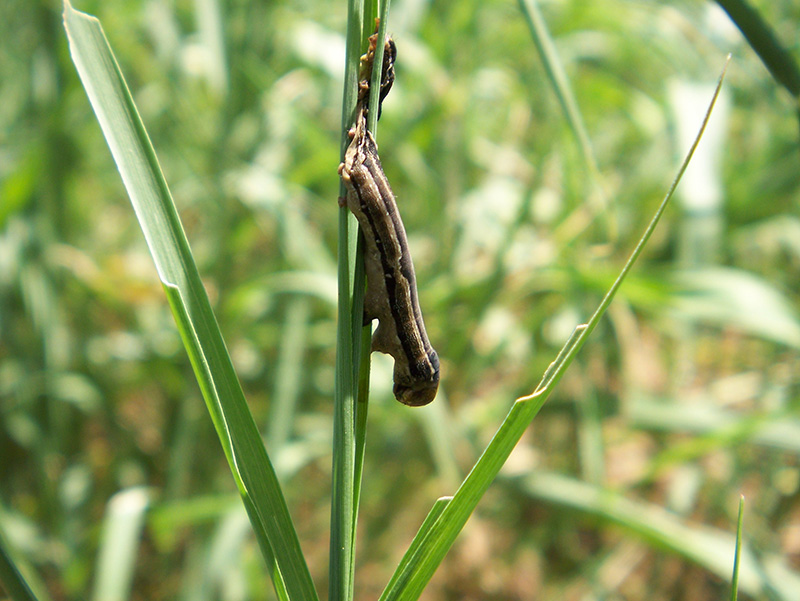
Larvae become infected when they ingest vegetation contaminated with virus occlusion bodies (OBs). The OBs break down in the alkaline conditions of the insect’s mid-gut and the virus replicates within host cells, generating millions of new OBs. Within 3-5 days the larvae die and they exhibit a characteristic inverted-V shape as they hang from vegetation (see photo). Soon, their cuticle (skin) ruptures, liberating the OBs on the vegetation where they can infect conspecifics.

Although extensive epidemics of SpexNPV often cause armyworm populations to crash (causing  up to 98% mortality; Rose et al. 2000), these natural disease outbreaks are usually far too late in the armyworm seasonal cycle to prevent major crop damage (see below). Ongoing research on the biology, ecology and genetics of SpexNPV is trying to assess its potential use as a microbial pesticide.

spexnpv

SpexNPV-infected armyworm larvae on pasture.  photo (c) Bill Page

 top             


Local production of a cheap armyworm  biopesticide

Making microbial pesticides can be just as expensive a producing chemical pesticides, because their production requires specialised insect rearing facilities and skilled personnel.  A substantially cheaper method of producing microbial pesticides is to do so in the field. 

This involves locating wild populations of the insect and then ‘seeding’ them with a lethal dose of virus by aerial or ground spraying. The virus then replicates within the hosts in the field and the virus-killed insects cabn be harvested a few days later, just like any other ‘crop’. This method was pioneered during the mid-1980s by EMBRAPA in Brazil, where it is currently used to produce >40 tonnes of baculovirus each year to protect 2 billion hectares of Soya bean crop against the velvetbean caterpillar, Anticarsia gemmatalis. Using this approach, the biopesticide can be produced in Brazil at a cost of just US$1.26 per hectare (compared to >US$10 per hectare for factory-produced chemicals and baculoviruses).

This is the model we hope to adopt for producing SpexNPV, and pilot studies have indicated that we can do so for a cost of less than US$3 per hectare (Mushobozi et al. 2005).  


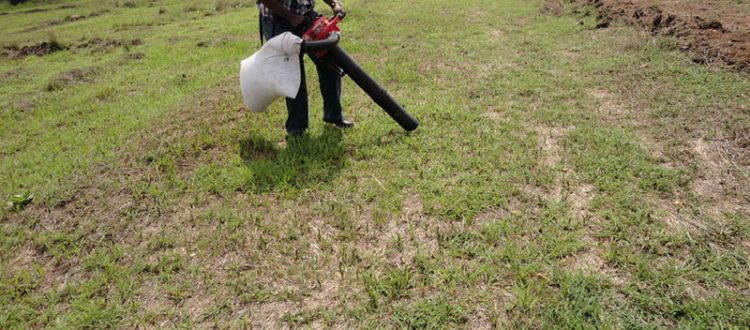
Harvesting SpexNPV with blower
Harvesting SpexNPV-infected armyworm larvae on pasture with a vacuum blower
- the SpexNPV-infected armyworm are sucked up and broken down into a paste for processing.  
photo (c) Wilfred Mushobozi

 top                


Summary of previous research


Previous research has shown the following:
  • SpexNPV is highly host-specific and so does not pose a threat to non-target organisms such as beneficial insects, livestock or humans (Cherry 1992).
  • SpexNPV is just as effective as currently used chemical insecticides (e.g. Diazanon) when applied using either ground or aerial systems, achieving <90% kill rate (Grzywacz et al. 2007).
  • Field-based production of SpexNPV in Tanzania is both feasible and affordable, costing approximately US$3 per hectare (Mushobozi et al. 2005).
  • The proportion of armyworm outbreaks showing signs of overt viral disease at the beginning of the armyworm season is extremely low or zero whereas, in some years at least, it increases to nearly 100% of late-season outbreaks, when many armyworm outbreaks are effectively controlled by the virus. 
  • There is a strong positive relationship between larval population density and the prevalence of SpexNPV (Redman 2005), consistent with the hypothesis that the virus is being transmitted horizontally between caterpillars in a density-dependent manner (e.g. Anderson & May 1981).
  • As larval density and virus prevalence increases, so too does the proportion of viral infections containing two or more virus genotypes (Redman 2005).
  • Different virus genotypes (‘clones’) differ significantly in their pathogenicity to armyworm and mixed-clone infections were significantly more pathogenic than any single-clone isolate tested (Redman 2005).
  • SpexNPV is widely prevalent in a “persistent, non-pathogenic form that can be vertically-transmitted from parents to offspring (Vilaplana et al. 2008) (see Box 1). In a host whose population is both migratory and subject to extreme fluctuations in numbers, the ability of a lethal pathogen to persist in a non-pathogenic form that can be passed vertically to the host’s offspring is key to its survival. This is both interesting and potentially an important characteristic that could be exploited in control, if its activation and persistence mechanism was better understood.
  • Insects receiving a sub-lethal dose of the virus as larvae have an increased level of overt disease in their offspring, passed on to them primarily via trans-ovarial vertical transmission (Vilaplana et al. 2008). 
top
                                spraying
                                     Application of chemical pesticide against armyworms on pasture.  photo (c) Ken Wilson 

Box 1. Persistent, covert virus infections


Most viruses are transmitted in a density-dependent fashion and so rely on interactions between hosts for transmission and persistence. This becomes a problem in low-density populations due to a shortage of new hosts to infect. Consequently, viruses have evolved a number of mechanisms to ensure persistence in the face of low or variable host densities. For the insect viruses, these include long-term survival in the environment, alternative hosts and vertical transmission.

While it has long been thought that horizontal transmission and persistence in the environment (outside of the host) are the main means of baculovirus survival, it is becoming increasingly evident that many species harbour ‘covert’ infections that are passed from adults to their offspring. Our understanding of this process, even in a group as widely employed as insecticides as the baculoviruses, is poor and we have little idea of how covert infections contribute to the maintenance of virus populations in the field.

There are two types of covert virus infection; ‘persistent’ infections and ‘latent’ infections. They are distinguished by the degree to which virus-encoded gene products are expressed and whether or not infectious virus particles are present.

Persistent virus infections are characterised by a constant low-level production of virus particles within an infected cell.  These infections represent a balance between the host and the virus, which may be maintained through the interaction of the cells and the virus alone, interaction with the host immune system, the production of defective interfering virus, or a combination of all three.  Persistent virus infections still express the full range of viral genes, although this expression may be down-regulated.

In a latent virus infection, the viral genome, and possibly some virus-encoded products, are present, but infectious virus particles are not formed.  Latent virus infections involve a shut-down in viral gene transcription with only those genes involved in maintaining the latent state being expressed.  Latent infections do not represent a dead-end for the virus as, with an appropriate triggering stimulus, the infection can revert to a fully reproductive overt infection.

For the majority of these ‘covert’ infections in insects, it has yet to be determined whether they represent persistent or latent infections, but clearly their prevalence indicates that they may play an important role in the survival and persistence of the virus in host populations.

Indeed, if our understanding of the S. exempta-SpexNPV interaction is correct, it is the vertically-transmitted virus, and not virus in environmental reservoirs, that is important in initiating epizootics.
top


African Armyworm Baculovirus Project

The African Armyworm Baculovirus Project is a consortial project with partners in the UK and Tanzania. The main partner organisations are Lancaster University, UK; University of Greenwich, UK; EcoAgriConsult Ltd, Tanzania; and the Tanzanian Government's Ministry of Agriculture and Food Security.

The ultimate goal of the African Armyworm Baculovirus Project is to further our understanding of the natural interaction between an insect host, the African armyworm (Spodoptera exempta), and its virus (SpexNPV), with a view to determining the impact of the virus on its host’s outbreak dynamics and how this might ultimately be manipulated in a novel, Africa-wide strategic control system (Box 2).

The funding for this research comes from a range of sources including The UK's Department for International Development (DfID), the Biotechnology and Biological Sciences Research Council (BBSRC), the Natural Environment Research Council (NERC) and the United States Agency for International Development (USAID). Current research is funded by the BBSRC-DFID's Sustainable Agriculture Research for International Development (SARID) programme and DFID's Research Into Use programme.

The SARID project is examining the spatio-temporal pattern of armyworm outbreaks, as well as variation in natural levels of SpexNPV in the wild (prevalence appears to vary from zero to nearly 90%) and molecular genetic variation in the vuirus. The RIU project is funding the building of a baculovirus processing plant (see below), which will take the crude SpexNPV-infected caterpillars and turn it into a dry powder formulation with a shelf-life of years. This project is also providing farmers in areas at high risk from armyworm attack with pheromone traps to monitor local moth activity (see photo below - the pheromone trap is hanging from the tree). The trap attracts moths that have migrated into the area and warns the farmers that armyworm infestations are likely in the coming few days. With this information they have time to acquire pesticide to control the armyworm and protect their crops. This 'community-based forecasting' approach has proved to be very successful. The RIU project in Tanzania plans to extend this network of local forecasters and ultimately to provide these communities with SpexNPV so that they can control the pest with a cheap and environmentally-friendly biopesticide.

AWforecasters  Pheromone trap
           Community-based forecasters at pheromone trap        Close-up of a pheromone trap                   
        
top

Box 2. Strategic control of armyworm using SpexNPV

Strategic control defined:

Conventionally, armyworm control is implemented when the caterpillars are feeding on food crops, with the aim of reducing losses. However, there is the potential for an alternative strategy for reducing armyworm impact: “strategic control”.

With this strategy, the pest is controlled in primary outbreak areas early in the armyworm season, regardless of which host plant it is feeding on, with the aim of preventing these infestations from acting as source populations for future pest outbreaks at the same sites or elsewhere (Rose et al. 2000).

Strategic control is longer-term and indirect, and is particularly appealing for migratory pest species because it can help to limit the geographical spread of the pest, so allowing resources for control to be better focussed.

African armyworm strategic control

African armyworm moths are highly migratory and can fly 100 km or more per night over several consecutive days (Rose et al. 2000). Their movements are largely governed by the seasonal progression of the inter-tropical convergence zone (ITCZ).

Thus, armyworm outbreaks in southern and central Tanzania act as “source” populations for moths that will migrate to northern Tanzania and Kenya (Figure 1). The offspring of these moths will ultimately migrate further northwards towards countries such as Sudan, Ethiopia, Somalia and Yemen; they also move southwards towards South Africa.

So, by controlling early-season outbreaks over large areas of central/southern Tanzania, it may be possible to prevent subsequent outbreaks from occurring in other parts of Tanzania and the rest of Africa later in the season.

Strategic control using chemical insecticides

Whilst strategic control of armyworm appears to be both desirable and economically feasible (Cheke & Tucker 1995), there are a number of problems associated with implementing this policy using conventional chemical insecticides.

First, it is undesirable to inundate the environment with large amounts of toxic chemicals that could provide a health risk to humans and their livestock, as well as to beneficial non-target insects and wildlife.

Second, it is unlikely that enough of the key outbreaks could be controlled using conventional insecticides, due to restrictions associated with spraying chemicals in National Parks and other sensitive wildlife areas, as well as the high costs of chemical insecticides.

However, neither of these problems is associated with armyworm control using NPV, due to the benign nature of the product (it is entirely safe to humans and livestock) and its relatively low cost (around US$3 per hectare for field-produced virus).

top 

Strategic control using baculovirus

SpexNPV also has a number of potential benefits not offered by conventional chemical insecticides.

In particular, unlike chemical insecticides, the virus is self-replicating.  This means that it not only kills the caterpillars targeted during the control operation, but also produces new virus OBs which then become available to infect new hosts several days later (‘secondary cycling’) - the infected insects effectively become small 'factories' producing millions more baculovirus particles.

In addition, moths that are sub-lethally infected as larvae appear capable of passing on lethal infections to their offspring, via vertical transmission of the virus through the ova (Vilaplana et al. 2009).

So, not only does SpexNPV result in effective control of armyworms in situ, but it may also provide a mechanism for controlling future outbreaks at the same site or elsewhere, as the virus migrates from outbreak to outbreak with sub-lethally infected moths.

Moreover, it potentially points to a novel approach to biological control by deliberately applying sub-lethal doses of virus to early-season outbreaks, with the aim of generating sub-lethal infections in adult moths that could disseminate virus to distant outbreaks where virus epidemics might be triggered.

Importantly, using field-based techniques, we estimate that SpexNPV could be manufactured for something in the region of US$3 per hectare, compared with US$10+ per hectare for most chemical insecticides.

Although a large-scale, strategic approach to pest management poses many logistical challenges, especially in Africa, there are a number of examples were an area-wide approach to pest control has proved extremely successful and highly cost-effective, including screwworm eradication in North Africa (e.g. Lindquist et al. 1992) and cassava mealybug control in West Africa (e.g. Neuenschwander 2001)

With funding from DFID's Research Into Use programme, a baculovirus processing plant has recently been constructed in Arusha, under the direction of EcoAgriConsult Ltd., Tanzania (see photo below). This is the first step in the process of producing large quantities of SpexNPV in powder form for long-term storage and country-wide application.

                     NPV lab July 2011

      NPV Processing Laboratory, Arusha, Tanzania (July 2011)                                                                                     photo (c) Wilfred Mushobozi

top


For enquiries about the African Armyworm Baculovirus Project, email Professor Ken Wilson (ken.wilson@lancaster.ac.uk) or one of the other project partners.


Consortium Partners

Project Researchers

top

Key Armyworm publications:

top

Cited references:

Anderson, R.M. and R.M. May (1981) The population dynamics of microparasites and their invertebrate hosts. Phil. Trans. Roy. Soc. Lond. B. 291: 451-524.

Benton TG, Plaistow SJ & Coulson TN (2006) Complex population dynamics and complex causation: devils, details and demography.  Proc. Roy. Soc. Lond. B. 273: 1173-1181.

Burden JP, Possee, RD, Sait SM, King LA & Hails RS (2006) Phenotypic and genotypic characterisation of persistent baculovirus populations of the cabbage moth (Mamestra brassicae) within the British Isles. Archives of Virology 151: 635-649.

Cheke RA & Tucker MN (1995) An evaluation of the potential economic returns from the strategic control approach to the management of African armyworm Spodoptera exempta populations in East Africa. Crop Protection 12: 91-103.

Cherry, A. J. (1992). Cross-infectivity of Spodoptera exempta nuclear polyhedrosis virus (SeNPV) and the infectivity of foreign viruses in S. exempta. Project Technical Report. Project A0047 Natural Resources Institute. Chatham UK. pp6

Coulson T, Catchpole EA, Albon SD, Morgan BJT, Pemberton JM, Clutton-Brock TH, Crawley MJ & Grenfell BT (2001) Age, sex, density, winter weather, and population crashes in Soay sheep. Science 292: 1528-1531.

Day RK, Haggis MJ, Odiyo PO, Mallya G, Norton GA & Mumford JD (1996) WormBase: A data management and information system for forecasting Spodoptera exempta (Lepidoptera: Noctuidae) in eastern Africa. J. Econ. Entomol. 89: 1-10.

Grzywacz D, Mushobozi W, Parnell M, Jolliffe F & Wilson K (in press) The evaluation of Spodoptera exempta nucleopolyhedrovirus (SpexNPV) for the field control of African armyworm (Spodoptera exempta) in Tanzania. Crop Protection.

Harvey AW & Mallya GA (1995) Predicting the severity of Spodoptera exempta (Lepidoptera: Noctuidae) outbreak seasons in Tanzania. Bull. Ent. Res. 85: 479-487;

Hodgson DJ, Hitchman RB, Vanbergen AJ, Hails RS, Possee RD & Cory JS (2004) Host ecology determines the relative fitness of virus genotypes in mixed-genotype nucleopolyhedrovirus infections. J. Evol. Biol., 17: 1018-1025.

Ibrahim KM, Yassin Y & Elguzouli A (2004) Polymerase chain reaction primers for polymorphic microsatellite loci in the African armyworm, Spodoptera exempta (Lepidoptera: Noctuidae). Molecular Ecology Notes 4: 653-655.

Lee KP, Cory JS, Wilson K, Raubenheimer D & Simpson SJ (2006) Flexible diet choice offsets protein costs of pathogen resistance in a caterpillar. Proc. Roy. Soc. B., 273: 823-829.

Leirs H, Stenseth NC, Nichols JD, Hines JE, Verhagen R & Verheyen W (1997) Stochastic seasonality and nonlinear density-dependent factors regulate population size in an African rodent. Nature 389: 176-180.

Lindquist DA, Abusowa M & Hall MJR (1992) The New World screwworm fly in Libya – a review of its introduction and eradication. Medical & Veterinary Entomology 6: 2-8.

Mushobozi WL, Grzywacz D, Musebe R, Kimani M & Wilson K (2005) New approaches to improve the livelihoods of poor farmers and pastoralists in Tanzania through monitoring and control of African armyworm, Spodoptera exempta. Aspects of Appl. Biol. 75: 37-35.

Neuenschwander P (2001) Biological control of the cassava mealybug in Africa: a review. Biological Control 21: 214-229.

Njuki J, Mushobozi W & Day R (2004) Improving armyworm forecasting and control in Tanzania: a socio-economic survey. CABI Africa Regional Centre Nairobi 39. pp49.

Parnell, M., Grzywacz, D., Jones, K, A,. Brown, M., Oduor, G. & Ong’aro, J. (2002) The strain variation and virulence of granulovirus of diamond back moth (Plutella xylostella Linnaeus, Lep., Yponomeutidae) isolated in Kenya.  J. Invert. Pathol. 79: 192-196.

Redman EM (2005) Baculovirus Diversity and its Effect on Virulence. PhD Thesis, University of Stirling.

Rose DJW, Dewhurst CF & Page WW (2000) The African Armyworm Handbook: The Status, Biology, Ecology, Epidemiology and Management of Spodoptera exempta (Lepidoptera: Noctuidae). Natural Resources Institute, Greenwich.

Vilaplana L, Wilson K, Redman EM & Cory JS (2009) Pathogen persistence in migratory insects: high levels of vertically-transmitted virus infection in field populations of the African armyworm. Evolutionary Ecology 22pp. DOI: 10.1007/s10682-009-9296-2.

Vilaplana L, Redman EM, Wilson K & Cory JS (2008) Density related variation in vertical transmission of a virus in the African armyworm. Oecologia 155: 237-246.
top

VIDEOS

Armyworm caterpillars (large late-instar larvae):

Armyworm infected with SpexNPV baculovirus:

top